● Module · Beta

Synthetic Biology

Design genetic circuits, build them as plasmids or CRISPR constructs, test them in the lab, and compare the results to simulation, all in one project.

Install from the Plugin Store in the Karcytics hub. Free for students and academic research.

Your license file lists the modules it covers — see how licensing works →

In plain terms

What is synthetic biology?

Synthetic biology treats living cells like programmable hardware. Just as an electronic circuit is built from standard parts — resistors, transistors, wires — a genetic circuit is built from standard DNA parts, like promoters (an on-switch) and repressors (an off-switch), wired together so a cell does something specific and predictable, the same way a circuit of resistors and transistors does something specific in an electronic device.

That design gets built into a cell one of two ways: as a plasmid — a small, circular loop of DNA inserted into the cell to add new instructions, separate from its own chromosome — or edited directly with CRISPR, a programmable pair of molecular scissors that cuts DNA at a specific, chosen spot, guided by a short strand called a CRISPR guide RNA.

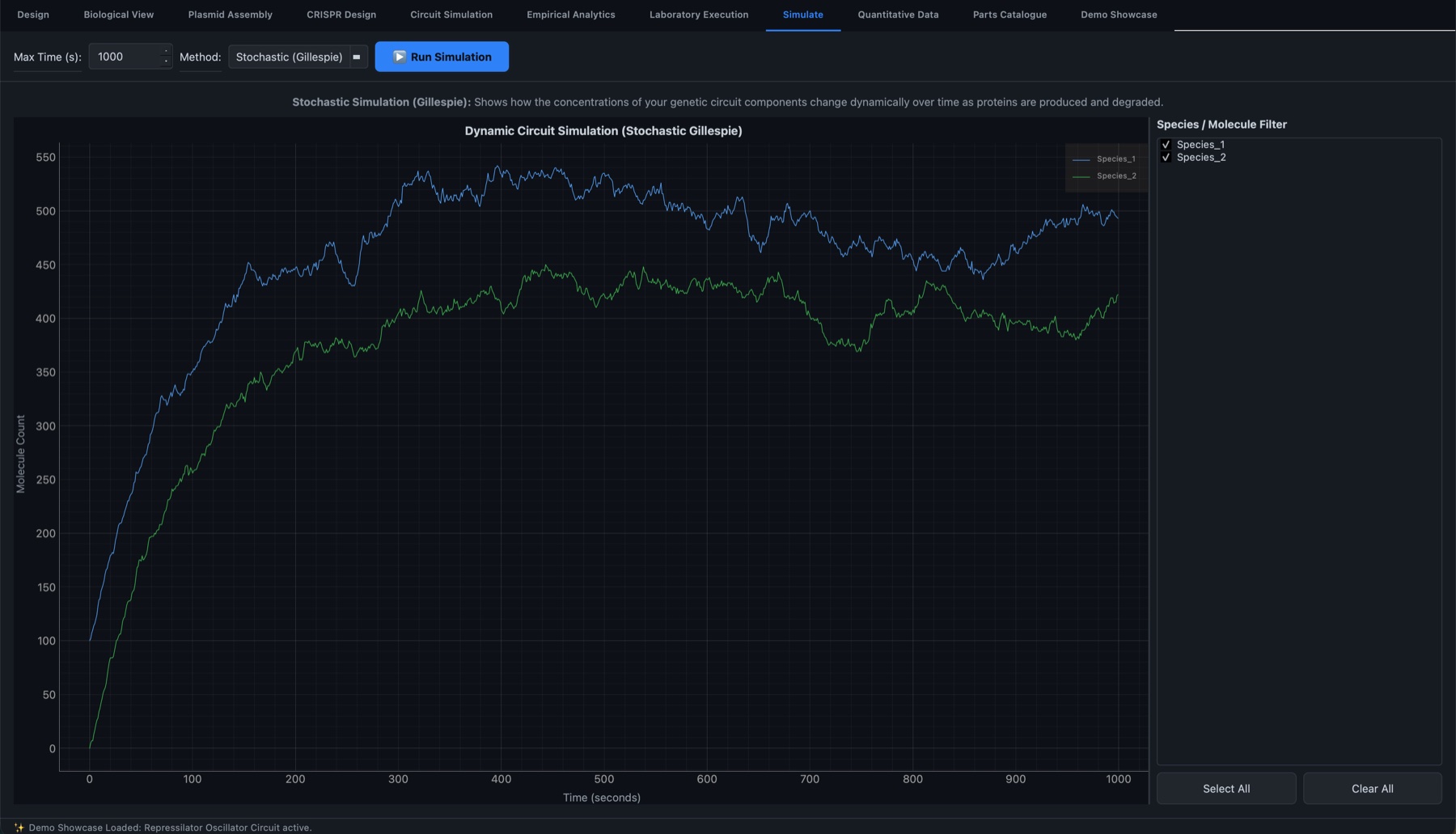
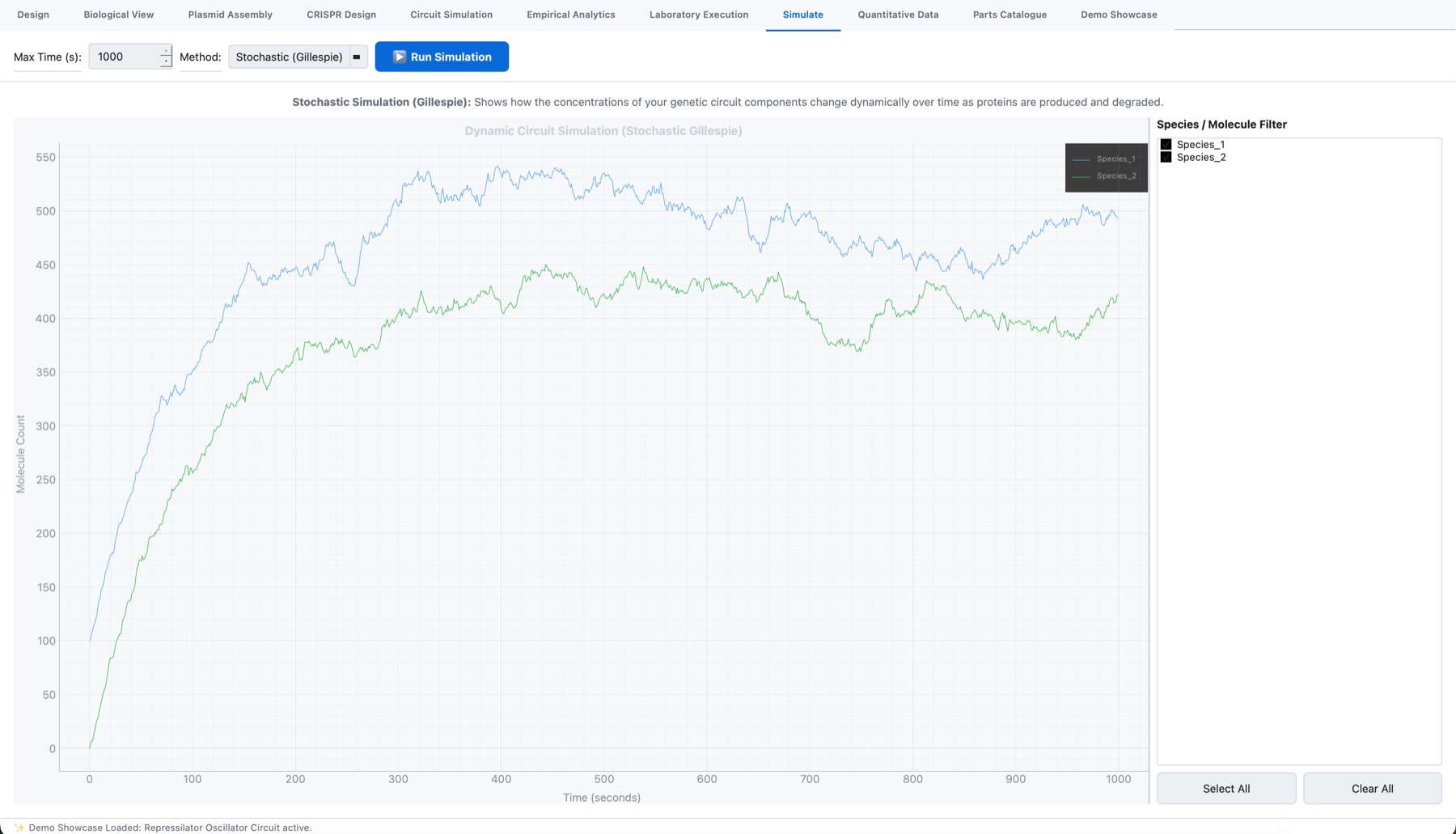
Before anything touches a bench, a kinetic simulation predicts how the circuit's output changes minute by minute, calculated from the biology's known reaction rates — a forecast you can check against what actually happens in the lab.

The cycle

Design, build, test, learn. Then do it again.

Synthetic biology isn't a straight line. Karcytics keeps all four stages in one project, so what you learn feeds back into the next design.

↺ Learn feeds back into the next Design.
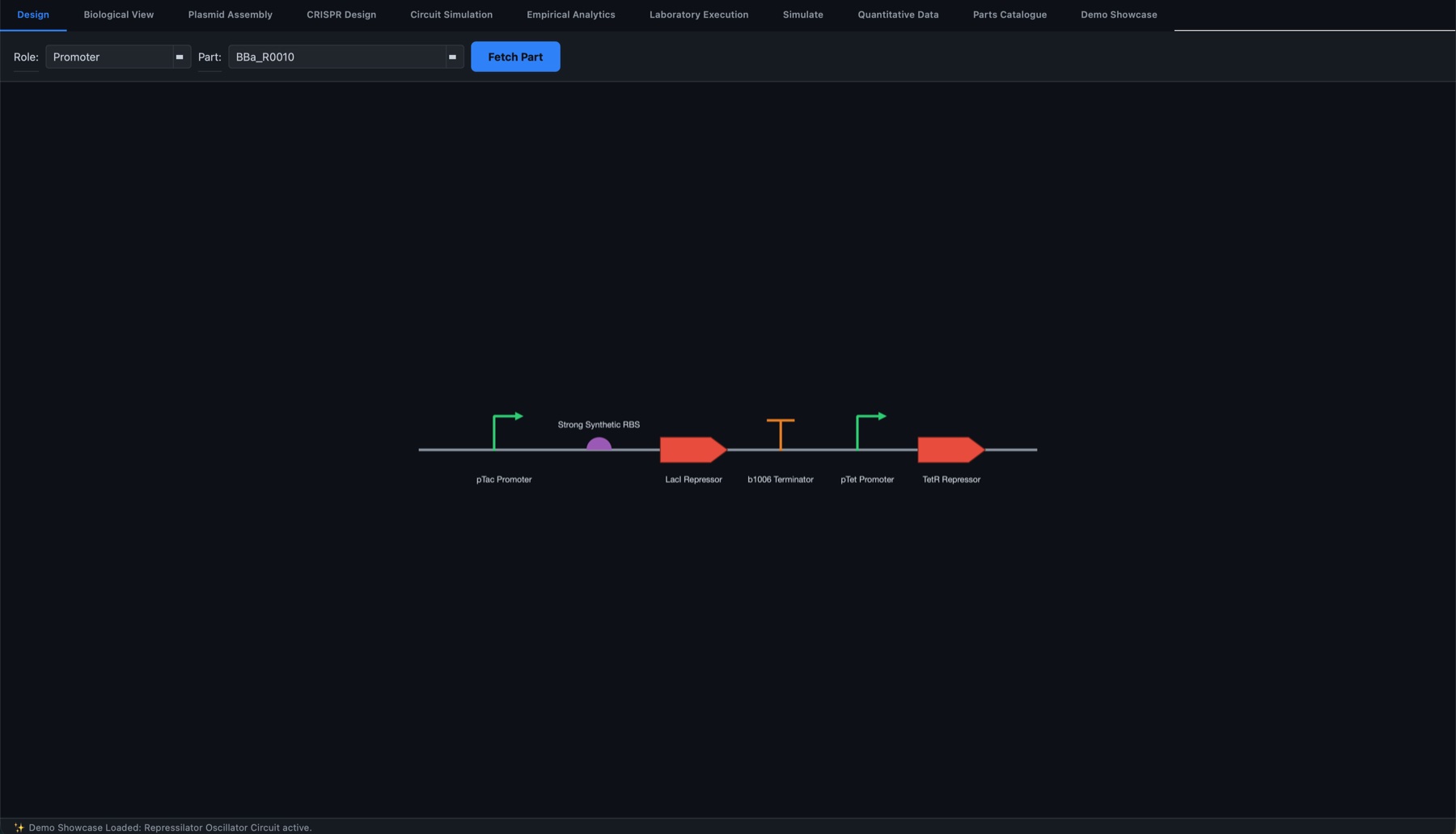
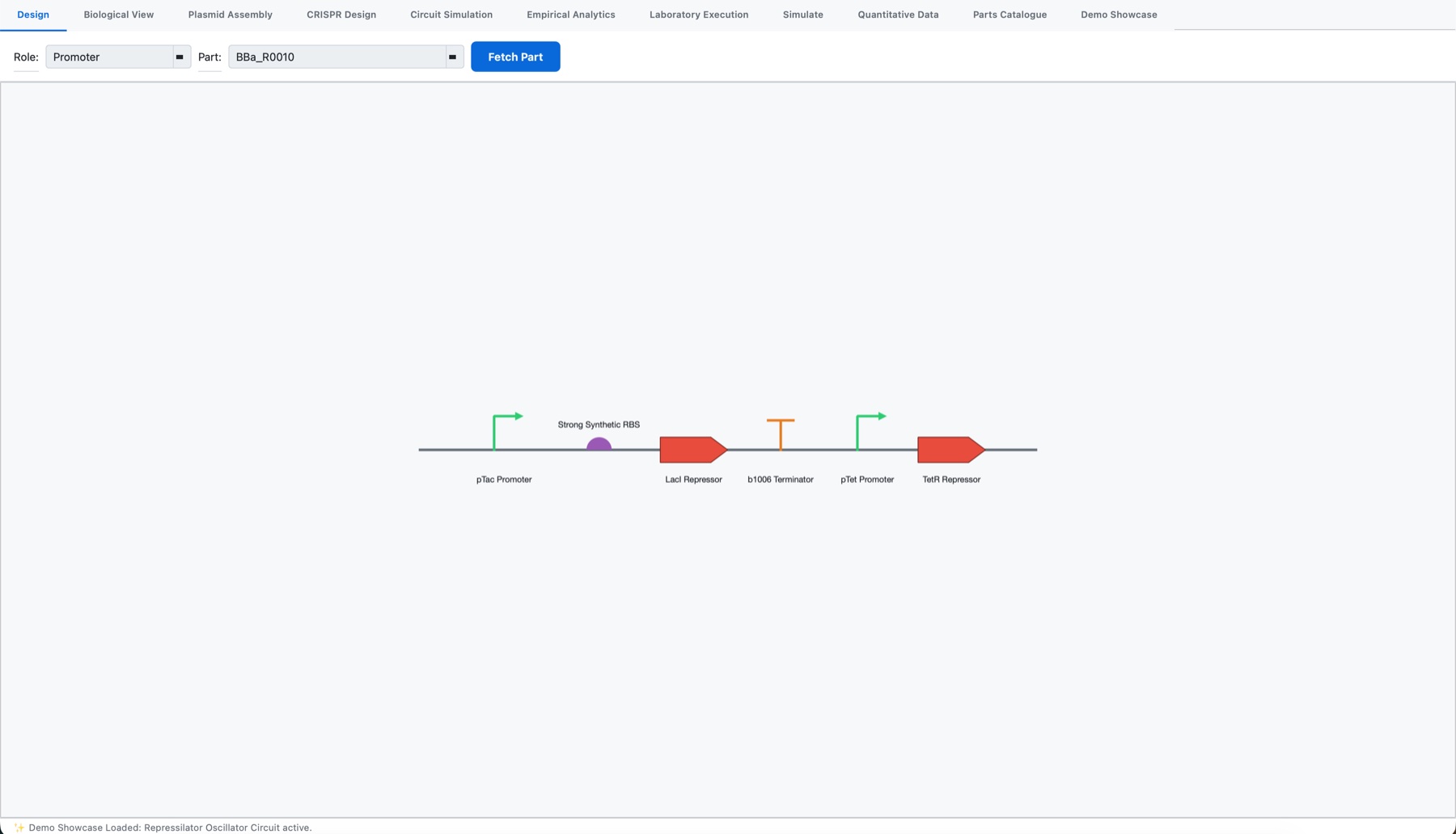
The Design canvas showing a repressilator oscillator circuit built from labeled promoter, repressor, RBS, and terminator parts
Design: a circuit built from labeled, standard parts.
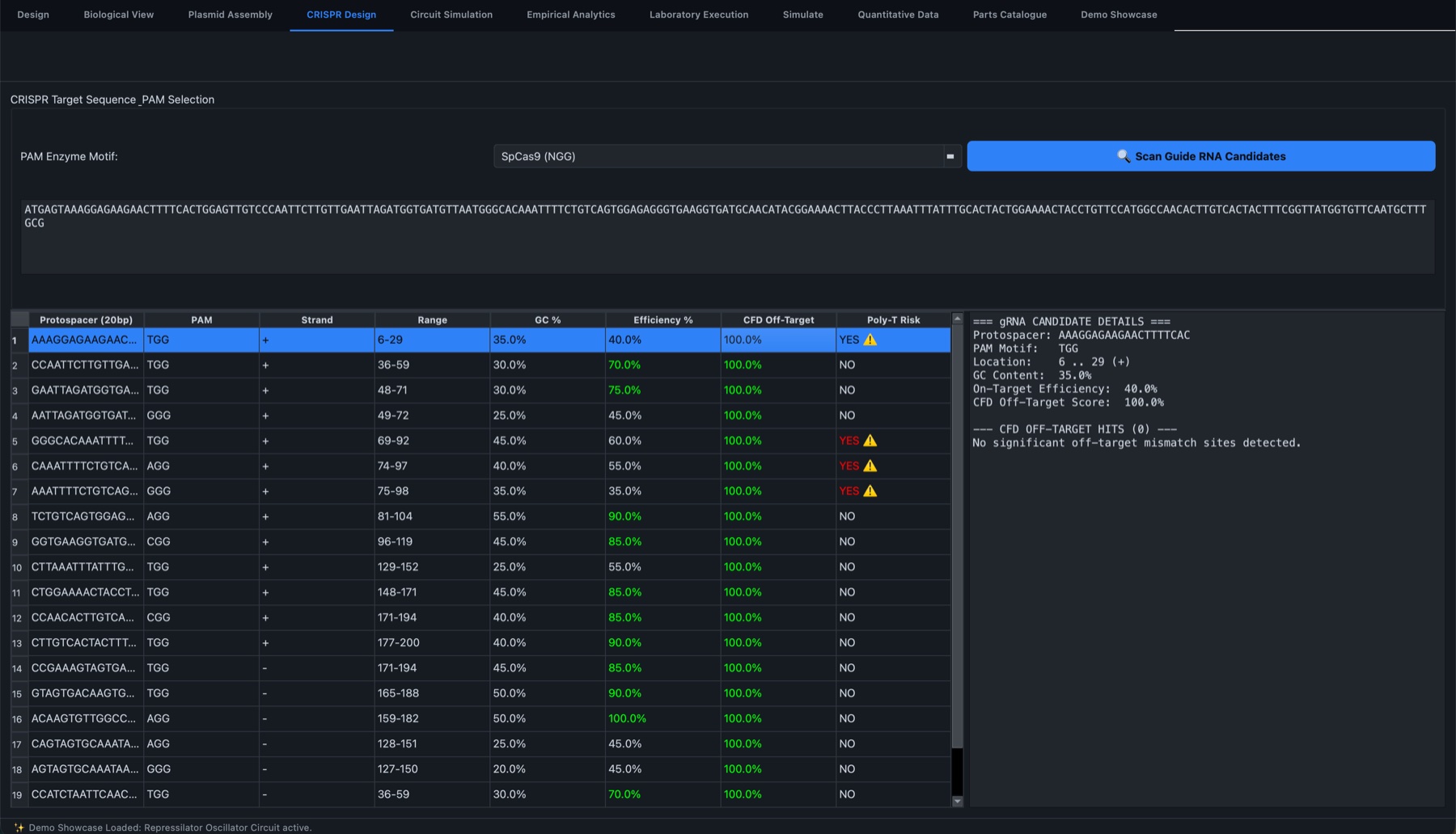
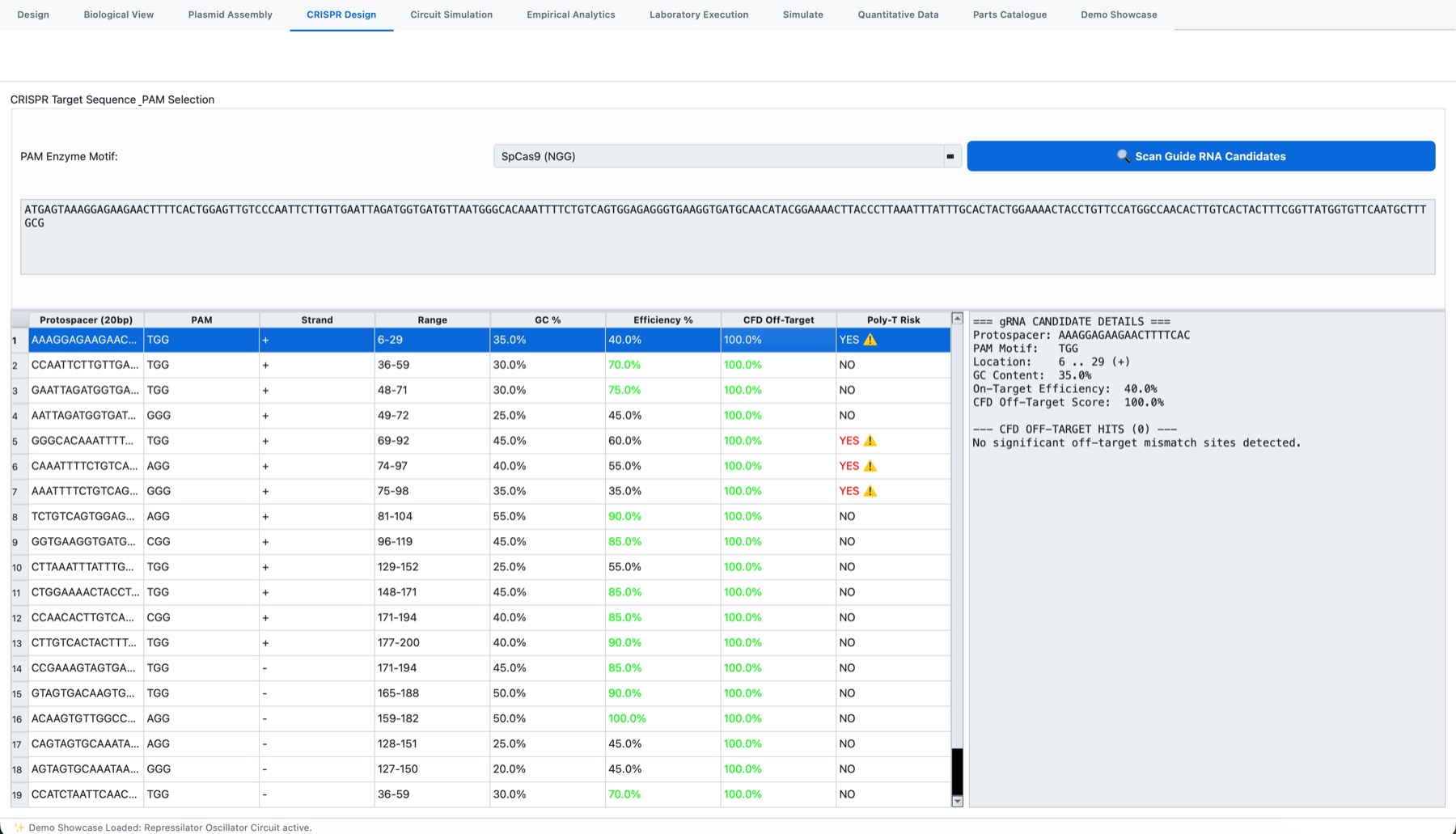
The CRISPR Design tab scanning guide RNA candidates, scored by efficiency, off-target risk, and poly-T risk
Build: guide RNA candidates scanned and scored automatically.
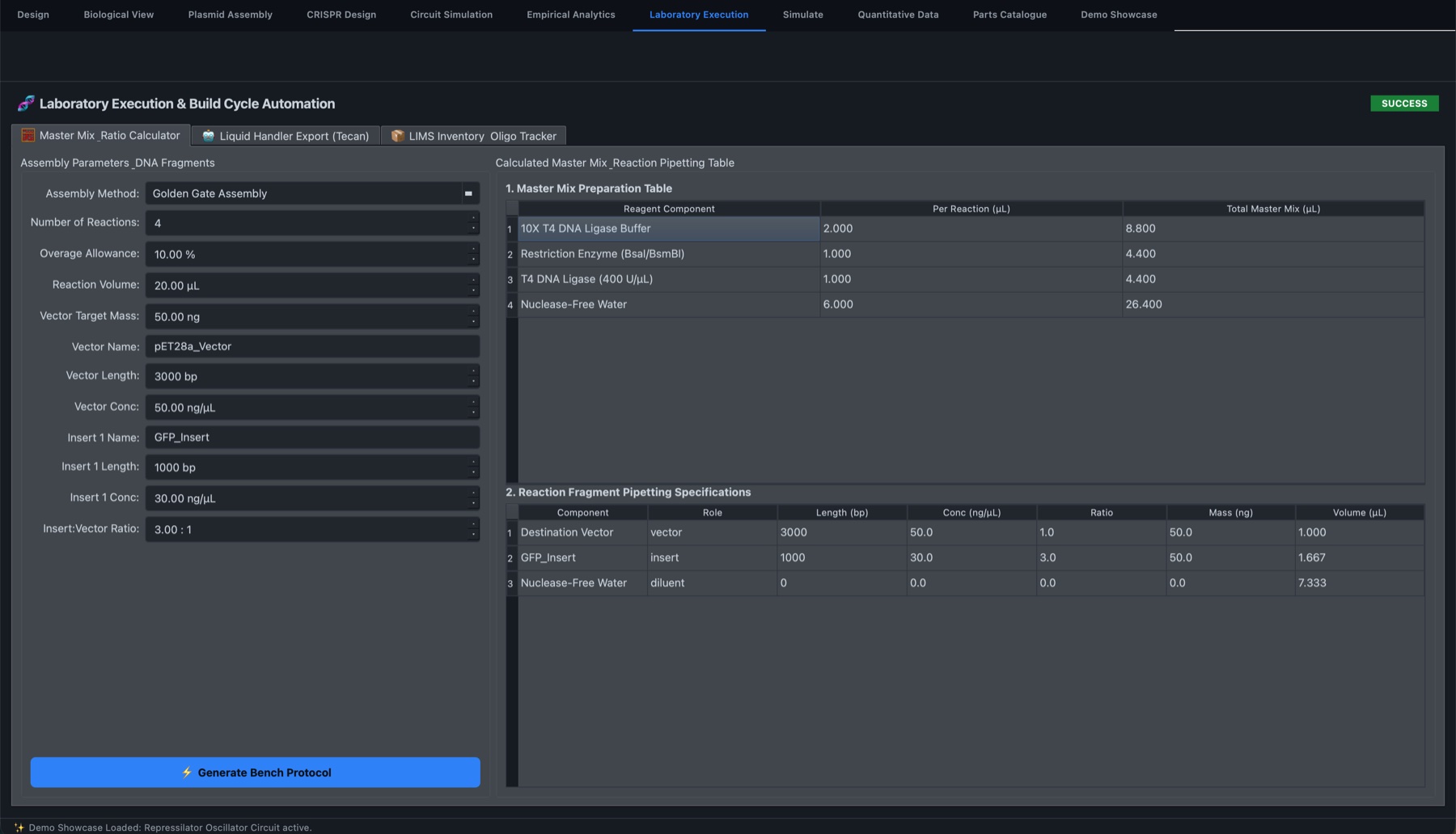
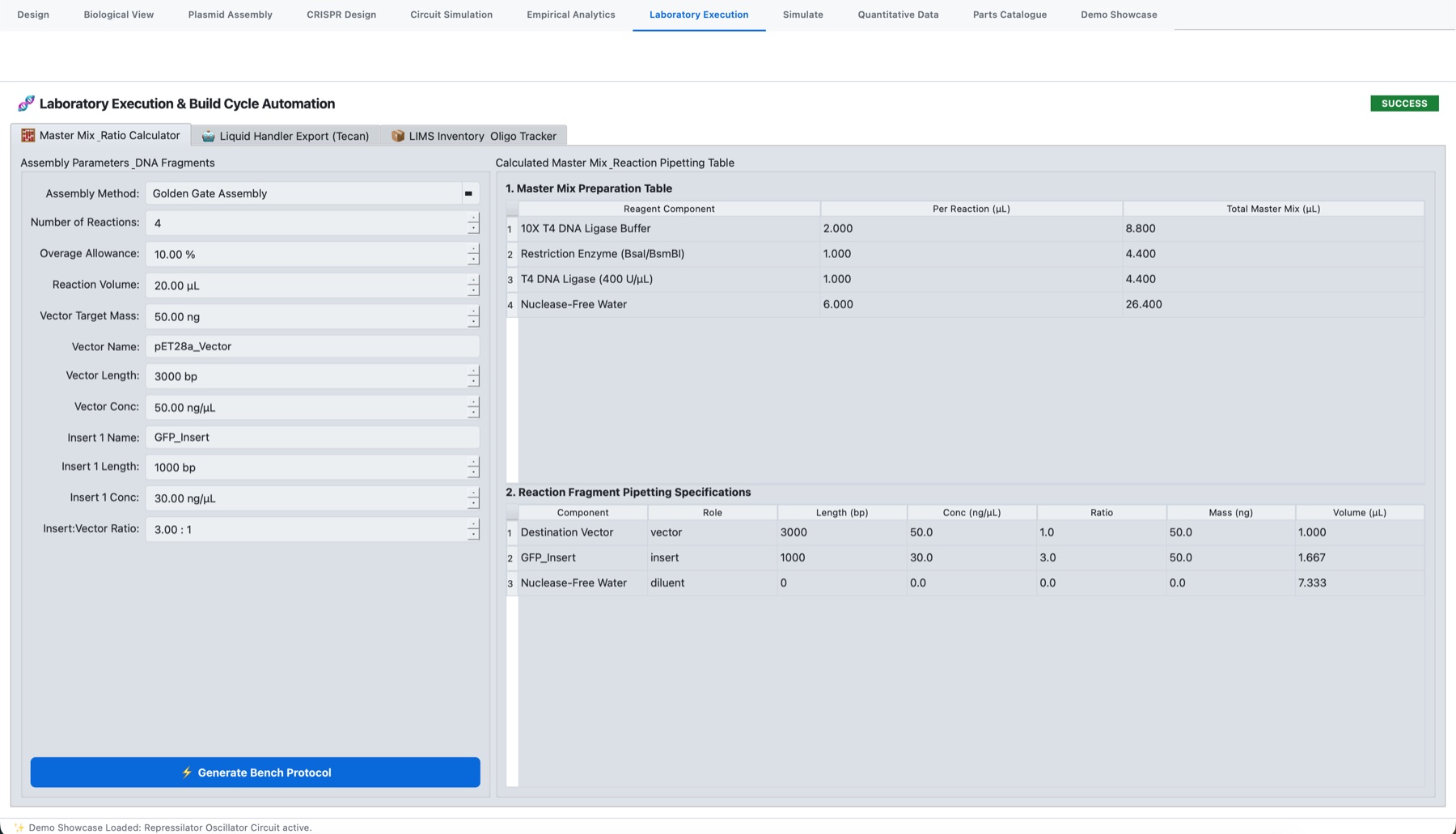
The Laboratory Execution tab computing a master mix and pipetting table for a Golden Gate assembly reaction
Test: assembly parameters turned into a real bench protocol.
A stochastic Gillespie simulation plotting two species' molecule counts over 1000 seconds
Learn: the circuit's predicted behaviour, run and plotted.

What it does

Logic gate construction

Assemble genetic logic gates from standard parts.

CRISPR guide design

Score candidate guide RNAs by on-target efficiency, off-target risk, and poly-T risk.

Plasmid & CRISPR construction

Turn a design into a plasmid or CRISPR guide RNA construct.

Kinetic simulation

Simulate circuit behaviour over time.

Lab-to-model comparison

Compare real results against the simulation to refine the design.

SBOL support

Standard biological part descriptions.

How it compares

Where it fits next to what's already out there.

A quick, honest look at where Karcytics fits next to the tools synthetic biology labs already know.

What Karcytics brings

  • CRISPR guides scored automatically — on-target efficiency, off-target risk, and poly-T risk — before you order one.
  • Kinetic simulation checked against real lab results, so a design's prediction and its bench outcome sit side by side.
  • One local project for design, build, test, and learn — no separate cloning tool and lab notebook to keep in sync.
SnapGene
A well-loved desktop tool for cloning and plasmid maps, but it doesn't score CRISPR guides or simulate circuit behaviour — and it's a paid, per-seat license (roughly $350/year at academic rates).
Benchling
Free for academic labs, which is a real strength — but it's cloud-hosted, so your designs live on Benchling's servers, and it's built around a full lab notebook rather than kinetic simulation.

Karcytics keeps design, CRISPR guides, and simulation in one local, free project, instead of spreading them across a paid cloning tool and a cloud notebook.

Common questions

What does the CRISPR guide RNA score mean?
For each candidate guide, Karcytics scores on-target efficiency, off-target risk (CFD), and poly-T risk, so you can compare candidates before you order one.
Can it simulate how a circuit behaves?
Yes. Kinetic simulation shows how a circuit's outputs change over time, so you can compare it against what the lab actually measured.
Why does the workflow loop back to Design?
Synthetic biology isn't a straight line: you design, build, test, and learn, then use what you learned to improve the next design. Karcytics keeps all four stages in one project instead of juggling separate tools.

Who it's for

Students in synthetic biology courses and labs designing genetic circuits.

Beta — features may change as the module matures

synthetic biologylogic gatesgenetic circuitsSBOLkinetic simulationdesign-build-test-learn
← All modulesNext moduleCytoMetrics →